
Rhinoplasty
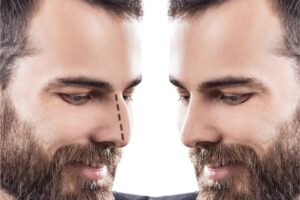
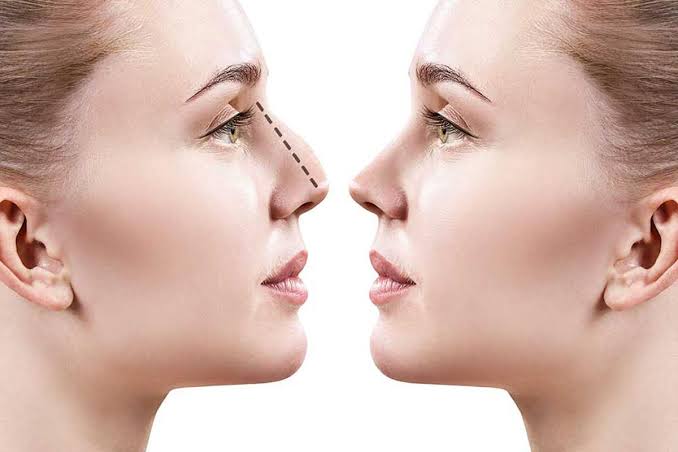
Sometimes referred to by patients as “rhinoplasty” or “nose reshaping, nosejob” rhinoplasty improves facial harmony and the proportions of your nose. It can also correct breathing disorders caused by structural defects in the nose.
What can rhinoplasty treat?
Nose size according to facial balance
Nose width at the bridge, or the size and position of the nostrils
Nasal profile with visible bumps or depressions in the bridge
Enlarged or swollen, drooping, upturned or hooked nose tip
Large, wide or upturned nostrils
nose asymmetry
If you want a more symmetrical nose, remember that everyone’s face is asymmetrical to some degree. Although the aim is to create facial balance and correct proportion, the results may not be completely symmetrical.
Rhinoplasty to correct a deviated septum
Nose surgery to improve a blocked airway requires careful evaluation of the structure of the nose as it relates to airflow and breathing.
Correction of septum curvature, one of the most common causes of respiratory distress, is achieved by adjusting the structure of the nose to provide better alignment.
How should I prepare for rhinoplasty?
When preparing for rhinoplasty surgery, you may be asked to:
Get a lab test
Take some medications or adjust your current medications
stop smoking
Avoid taking aspirin, anti-inflammatory medications, and herbal supplements as they can increase bleeding.
Your plastic surgeon will also discuss where your procedure will be performed.
Rhinoplasty may be performed at an accredited office-based surgical facility, a licensed ambulatory surgical center, or a hospital. Be sure to arrange for someone to drive you to the operating room and stay with you for at least the first night after surgery.
What are the stages of rhinoplasty surgery?
Rhinoplasty surgery includes the following steps:
Step 1 – Anesthesia
Medications are given for your comfort during the surgical procedure. Options include intravenous sedation or general anesthesia. Your doctor will recommend the best choice for you.
Step 2 – Incision
Rhinoplasty is performed using a closed procedure, in which incisions are hidden inside the nose, or an open procedure, in which an incision is made along the columella, the narrow strip of tissue separating the nostrils.
Thanks to these incisions, the skin covering the nasal bones and cartilages is gently lifted and access is provided to reshape the nasal structure.
Open rhinoplasty incision along the columella
Step 3 – Reshaping the nose structure
An overly large nose can be reduced by removing bone or cartilage. Sometimes nose surgery may require the addition of cartilage grafts.
Most commonly, cartilage from the septum, the partition in the middle of the nose, is used for this purpose. Sometimes cartilage from the ear or rarely a section of rib cartilage can be used.
Step 4 – Correcting a deviated septum
If the septum is crooked, it can be straightened and the protrusions inside the nose can be reduced to improve breathing.
Step 5 – Closing the incision
After the nasal infrastructure is brought to the desired shape, the nasal skin and tissue are reshaped and the incisions are closed.
Additional incisions may be placed in the natural curves of the nostrils to change their size.
Step 6 – See the results
For a few days, the splint and gauze can support the nose as it begins to heal. Learn more about rhinoplasty results.